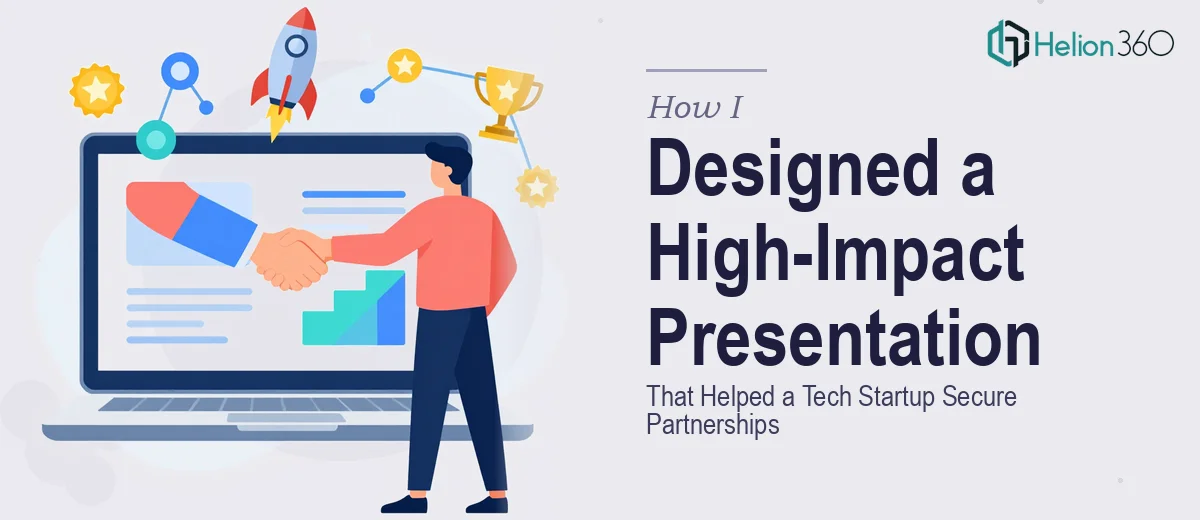
The Pressure of a Pre-Launch Deadline
When a tech startup came to me with a tight product launch window and a clear goal — secure partnerships before the month was out — I knew the stakes were high. They needed a Google Slides presentation that could do two things at once: explain a complex product clearly and make an immediate visual impression on potential partners.
The brief was straightforward on the surface. Create a polished, visually engaging slide deck that highlighted key product features, communicated the startup's edge in the market, and worked as both a live pitch tool and a leave-behind quote document. Simple enough, in theory.
Where Things Got Complicated
I started with a structure I was comfortable with — an intro, problem statement, solution, product features, market differentiation, and a closing slide. The content was solid. But turning that into a Google Slides presentation that actually felt like a premium product was a different challenge.
The startup's visual identity was still being finalized, which meant I was working with partial brand assets. The product screenshots they shared were low resolution. The copy they provided needed trimming — there was too much text crammed into each slide, and the data they wanted to include had no visual form yet. Charts, comparisons, and feature callouts were still buried in a Word document.
I spent two days trying to make it work. I redesigned layouts, attempted to build custom infographics, and tried to reconcile conflicting style references the client had shared. The result looked competent but not convincing — not the kind of Google Slides presentation design that would land a partnership.
Bringing in the Right Support
At that point, I reached out to Helion360. I explained the situation — a pre-launch deadline, incomplete brand assets, dense content, and the need for a presentation that could carry real weight in a business setting. Their team asked the right questions upfront: about the audience, the product category, the tone the startup wanted to project, and how the deck would actually be used.
That conversation alone made the difference. They weren't just going to take my draft and clean it up. They were going to rebuild it with a clear purpose in mind.
What the Final Presentation Looked Like
Helion360 came back with a version that solved every problem I'd been stuck on. The layout used a clean, modern visual system that gave the product room to breathe without looking sparse. They pulled the key data points out of the copy and turned them into sharp, readable visual comparisons — the kind that land quickly in a pitch setting.
The feature highlights were restructured so each slide communicated one clear idea, which made the flow feel confident rather than cluttered. They also handled the brand asset issue by building a visual style that complemented the startup's partial identity and could be updated once branding was finalized. The quote document section — which needed to function as a formal business proposal — was integrated naturally into the deck without breaking the visual tone.
The whole presentation sat at around 18 slides and worked equally well as a live walkthrough or a standalone send.
What This Project Taught Me
Building a startup pitch presentation in Google Slides is not just a design task. It is a communication problem. Every slide needs to make a case, hold attention, and build toward a clear ask. When the assets are incomplete and the timeline is compressed, the gap between a functional deck and a persuasive one gets wider fast.
What I underestimated was how much experience-driven judgment goes into the structural decisions — which data to visualize, where to place a feature callout, how to balance text density across slides. Those aren't choices you can make well under pressure without a clear system.
If you're building a Google Slides presentation for a product launch or a partnership pitch and the complexity is outpacing your bandwidth, Helion360 is the team I'd point you toward — they took a stuck project and delivered something the startup was genuinely proud to send out.