

The Task Looked Simple at First
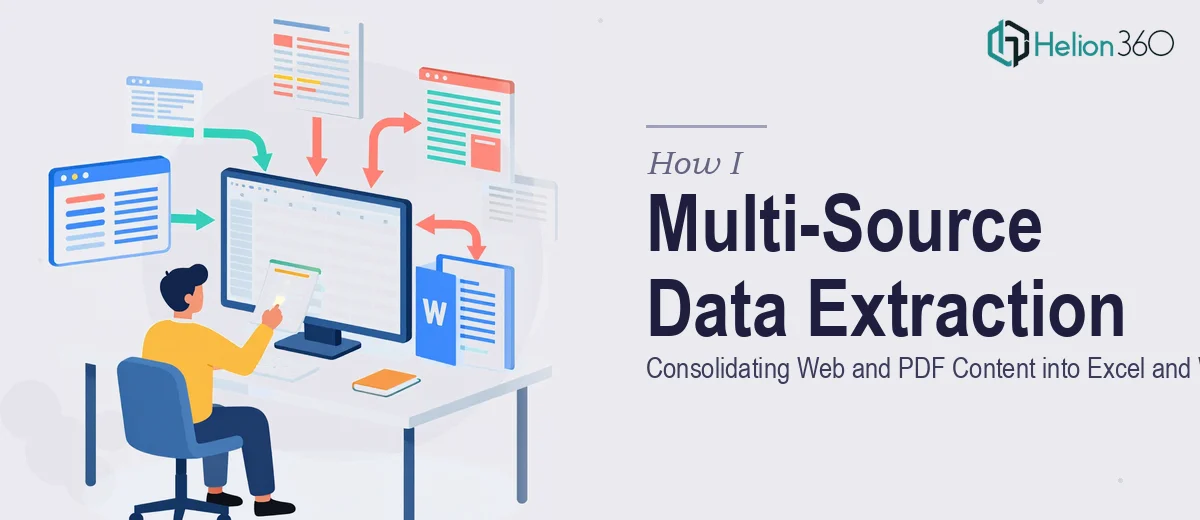
When I first mapped out the project, it seemed straightforward enough. I had a collection of webpages and PDF documents, and the goal was to extract the relevant content from each source and organize it neatly into Excel and Word files for later analysis. Pull the data, clean it up, drop it into the right format — done.
I started with the webpages. Some of them cooperated well. I could copy text directly, paste it into a working document, and move on. But others were a different story. Certain pages had content structured in ways that broke apart when pasted — tables lost their formatting, numbers jumbled, and context fell apart entirely. What I expected to take a couple of hours started stretching into an entire day just on the web portion.
The PDF Problem Was Harder Than Expected
Then came the PDFs. A few of them were clean, text-based files that copied over without much friction. But several were scanned documents or had layouts that made direct extraction nearly impossible without significant cleanup. Copying from those files meant dealing with garbled line breaks, merged columns, and missing characters that needed to be manually corrected before the data made any sense.
I tried a few tools to speed up the process — some browser extensions for web scraping, a couple of PDF-to-text converters — but the output still required heavy manual work to get into a usable state. The structure needed for the Excel file was specific: each field had to land in the right column, and the Word document needed the content formatted consistently across all sources. That kind of precision takes time, and it became clear that the volume of material was more than I could manage accurately while keeping to the deadline.
Bringing in the Right Support
After hitting a wall on day two, I reached out to Helion360. I explained the project — the mix of webpage links and PDF documents, the output requirements for both Excel and Word, and the timeline I was working with. Their team understood the scope immediately and took it from there.
What helped was that they did not just dump raw text into spreadsheets. They organized the Excel file with clear column headers and consistent data entry across all source types, making it actually usable for analysis rather than just filled in. The Word document was handled with the same attention — content was structured uniformly, and nothing looked like it came from five different sources pasted together.
What the Finished Output Looked Like
By the time the files came back, the difference was obvious. The Excel workbook had the data organized by source, with each category of information in its own column, and every row was clean. No stray text, no formatting artifacts from the original PDFs, no inconsistencies between what came from webpages versus scanned documents.
The Word document was similarly clean — content flowed consistently from section to section, and anyone picking it up without knowing the source material would have no idea it had been stitched together from multiple formats. That kind of output is what actually makes downstream analysis possible.
What This Kind of Work Actually Takes
Data extraction and consolidation from multiple sources sounds like a minor administrative task, but it rarely is. The real work is in the cleaning, structuring, and verifying — making sure the information that lands in Excel and Word actually reflects what was in the original sources without error or omission. When you are pulling from ten or fifteen different webpages and a stack of PDFs, even small inconsistencies compound quickly.
Having handled the early stages myself gave me a clearer picture of what the project actually required. The tools help, but someone still needs to make judgment calls about how content is categorized, what gets included, and how the final files should be structured for the people who will use them.
If you are dealing with a similar project — extracting content from webpages, PDFs, or both into structured Excel and Word files — Helion360 is worth reaching out to. They handled the volume and the detail work I could not get through alone, and the output was ready to use from the moment I opened the files.