The Brief Sounded Simple Enough
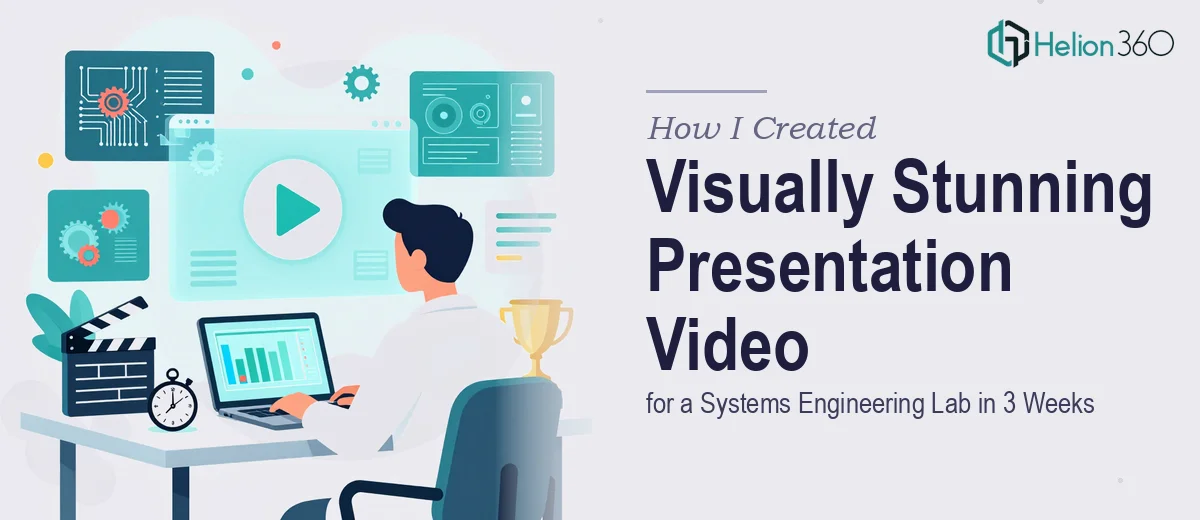
When the systems engineering laboratory I was working with asked me to produce a presentation video showcasing their latest research and technology developments, I said yes with full confidence. The goal was clear: create a visually engaging, informative video that would educate stakeholders and impress anyone who watched it. The deadline was three weeks from the kickoff call.
I had used Adobe Premiere Pro before and was comfortable putting together basic edits. The team wanted motion graphics, animated diagrams of engineering systems, and a polished visual narrative that felt closer to a broadcast-quality production than a standard slideshow recording.
That gap between what I could do and what they actually needed became apparent very quickly.
Where the Complexity Started Piling Up
The laboratory's work involved dense technical content — system architecture diagrams, workflow visualizations, and data-heavy process maps. Translating all of that into something visually engaging for a non-specialist audience requires more than decent editing. It requires motion design thinking.
I started in Adobe Premiere Pro, cutting the recorded footage and laying in narration. That part went reasonably well. The problem came when I moved into Adobe After Effects for the motion graphics layer. The team wanted animated infographics that could show how their systems interact in real time. I could build rough versions, but they looked amateurish next to the reference examples the lab shared with me.
Adobe Illustrator was also in the mix — the team needed custom vector assets and technical iconography built from scratch to match their branding. I can use Illustrator at a basic level, but building a full set of branded engineering icons under time pressure was not something I could deliver at the quality they expected.
By the end of week one, I had a solid structure and rough assembly, but the visual quality needed to be significantly higher to match the lab's reputation.
Bringing in the Right Team
After hitting that wall, I came across Helion360. I explained the situation — the content was ready, the structure was mapped out, but the motion graphics and visual design layer needed a professional hand. Their team reviewed what I had built and stepped in immediately.
What made the collaboration efficient was that I did not need to start over. Helion360 worked directly with the existing Premiere Pro timeline and the After Effects project file I had started. Their designers rebuilt the motion graphic sequences properly, created a cohesive set of custom vector icons in Illustrator that matched the lab's visual identity, and animated the technical diagrams in a way that was both accurate and genuinely watchable.
The visual storytelling aspect — how each section of the video transitioned, how the data was revealed progressively, how the voiceover and graphics reinforced each other — all of that came together in the second and third weeks under their work.
The Final Output
The completed presentation video ran just under six minutes. Every section of the laboratory's work had its own visual identity within the piece, while the overall design remained cohesive. The animated system diagrams were clean and precise. The motion graphics reinforced the narration without overwhelming it.
The engineering team's reaction when they saw the final cut was exactly what the project had been aiming for. The video did not just inform — it communicated the sophistication and ambition of the laboratory's work in a way that static slides or a basic screen recording never could have.
The three-week deadline was met. The delivery was clean. And I came away with a clear understanding of where professional motion design expertise changes the outcome of a project like this.
What This Kind of Project Actually Takes
A presentation video for a technical organization is not just a video. It is a visual argument for the value of the work being done. Every graphic choice, every transition, every animated element either supports that argument or weakens it. The Adobe tool stack — Premiere Pro, After Effects, Illustrator — gives you everything you need technically, but the skill to use all three in combination, at professional quality, under a tight deadline, is genuinely specialized work.
If you are facing a similar project — a lab showcase, a technical product video, or any presentation that needs to move beyond slides — Helion360 is worth reaching out to. They handled the parts of this project that required real motion design expertise, and the final result reflected that directly.